By Marcela Pereira, Associate Research Director, Toluna Brazil, and Erin Adams, Regional Head of Research and Client Services, North America.
June, 2026
Digital transformation is fundamentally reshaping the online shopping landscape. With endless options available in just a few clicks, today’s shoppers are more informed, discerning, and selective. To better understand this evolution in consumer behaviour, Toluna conducted a deep dive into changing purchasing habits, the impact of AI, and implications for brands in the retail space.
Using Immerse and Toluna Start, we ran a multi-phase study of active digital shoppers across 14 countries (the United States, the United Kingdom, France, Germany, Italy, Spain, Brazil, Australia, Singapore, Poland, the UAE, Mexico, India, and the Netherlands) to explore how consumer expectations and experiences are changing across the globe.
Let’s take a look at what the data tells us.
A hybrid shopping environment
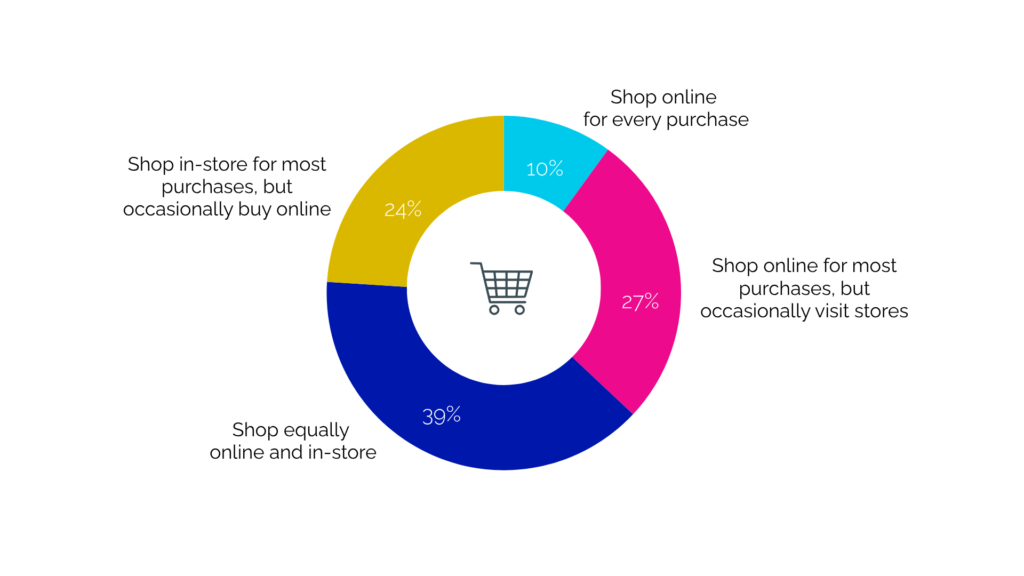
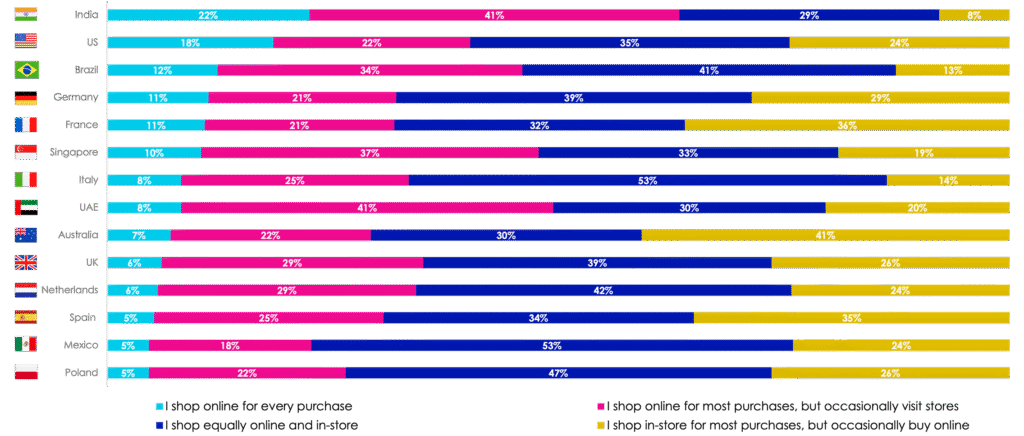
Most consumers combine online shopping with in-store shopping, underscoring the continued importance of physical stores in a digital era. Across markets, shopping habits spread across online, in-store, and hybrid purchases: there’s no one dominant channel.
Purchase Habits – Online vs. In-Store
When it comes to online shopping, 3 factors emerge as key drivers:
- Convenience: The ease of home delivery makes online shopping an attractive option, especially for men aged 35+.
- Flexibility: Online shopping offers the freedom to shop anywhere, any time.
- Price: Shoppers often find better prices and discounted items online.
On the other hand, in-store experiences provide unique benefits that online shopping can’t fully replicate, namely:
- Sensory experience: In-store shopping allows consumers to see, touch, and smell products before committing to purchase. This is the leading motivation behind in-store shopping for most countries.
- Urgency: In-store shopping allows consumers to purchase products immediately, taking away the need to wait for delivery.
- Leisure: For many consumers, visiting a store is a pleasurable experience: it gives them the opportunity to browse, discover new products, and try items before buying.
One of the key factors influencing whether consumers shop online or in-store is the type of product they are purchasing. Products like fresh items, medicines, and other perishable & tactile products are more likely to be bought in-store, whereas standardized products like electronics, home appliances, stationary, and books are more likely to be bought online (where they’re likely to get a better deal).
The role of sustainability
Sustainability is a hot topic in today’s retail landscape, and in markets like India and the UAE, the data reflects this interest. However, globally, only 37% of consumers consider sustainability when shopping online.
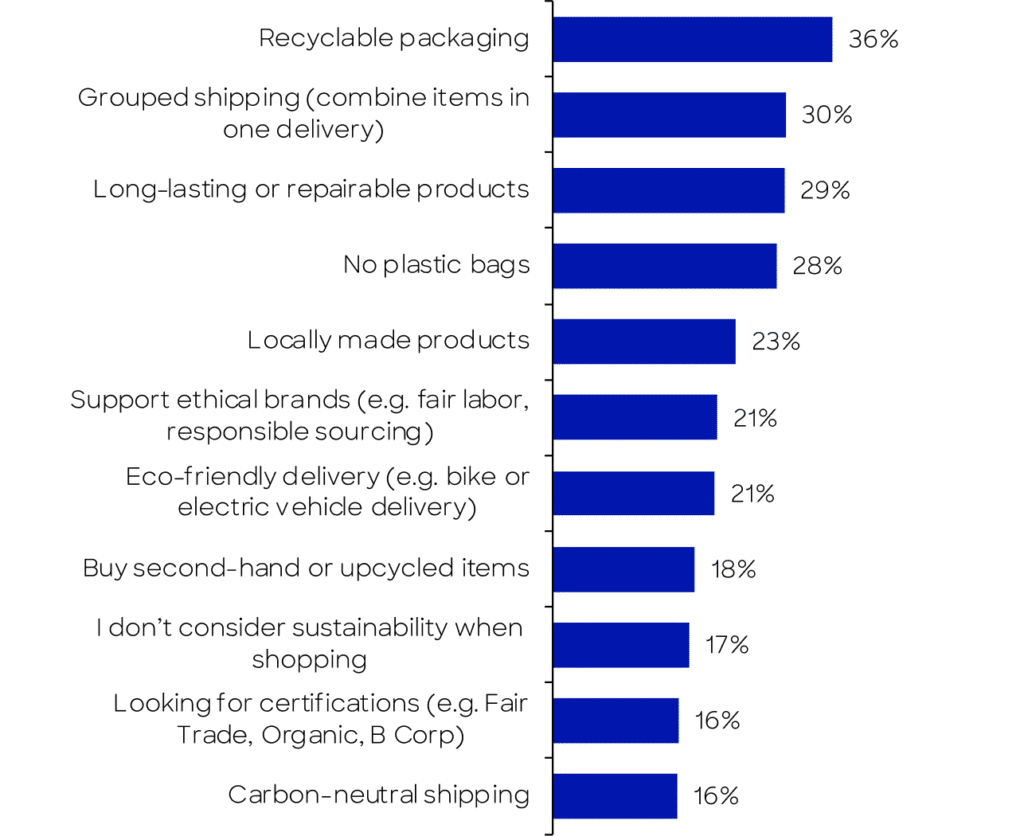
When sustainability does matter, shoppers consider a range of factors, mainly recyclable packaging, group shipping, and durable products:
Sustainability Actions Considered
Roughly 1 in 4 global consumers are willing to pay more for a sustainable product, but for over half of these consumers, price remains the deciding factor. This reveals a clear trade-off between sustainability and cost. Among those willing to pay more, most would spend up to 10% extra for a sustainable product.
Amount willing to pay

Product reviews: the currency of credibility
In this increasingly digital marketplace, product reviews have become the most relevant source of research in consumer decision making. This reflects a desire for authenticity, transparency, and real-life experience when choosing what to buy.
Where people research before buying
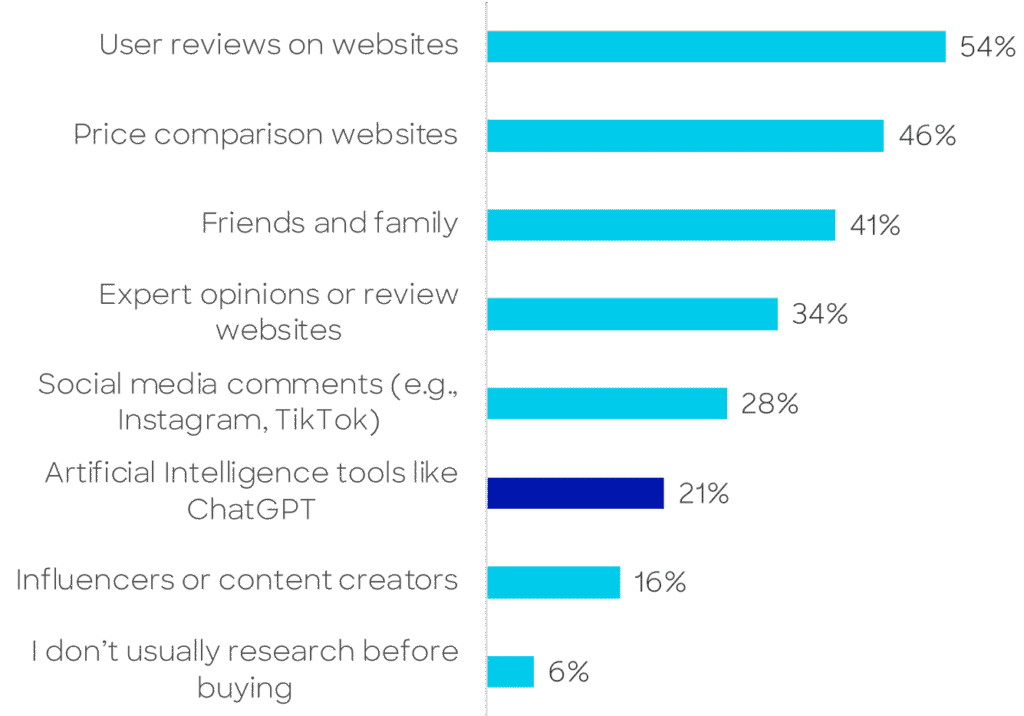
Product research sources vary by market, suggesting that sources are perceived differently across countries, and that marketing touchpoints should be localized. That said, word-of-mouth recommendations (e.g. from friends and experts) and user reviews are the most trusted sources, outweighing even influencers and branded content. This further underscores the power of authentic, unbiased 3rd party validation.
In addition, AI-powered tools are gaining traction as a credible source for product recommendations worldwide. These tools have already established trust in countries like the UAE, India, and Brazil.