MRMW APAC 2026, organized by Merlien Institute, returned to Singapore on April 14-15, bringing together market research and consumer insights leaders from across Asia-Pacific for two days of sessions, panels, and conversations. Attendees came from organizations spanning FMCG, healthcare, banking, technology, and research agencies, a mix that set the tone for an event built around questions that cut across categories.
If there was one thread running through this year’s edition, it was a redefinition of what the insights function is for. Across talks on strategy, customer experience, and culture, a consistent message emerged: insights are no longer positioned as a support function that feeds reports to other departments. Increasingly, they are becoming the function that shapes the decision itself.
From Reporting to Strategy
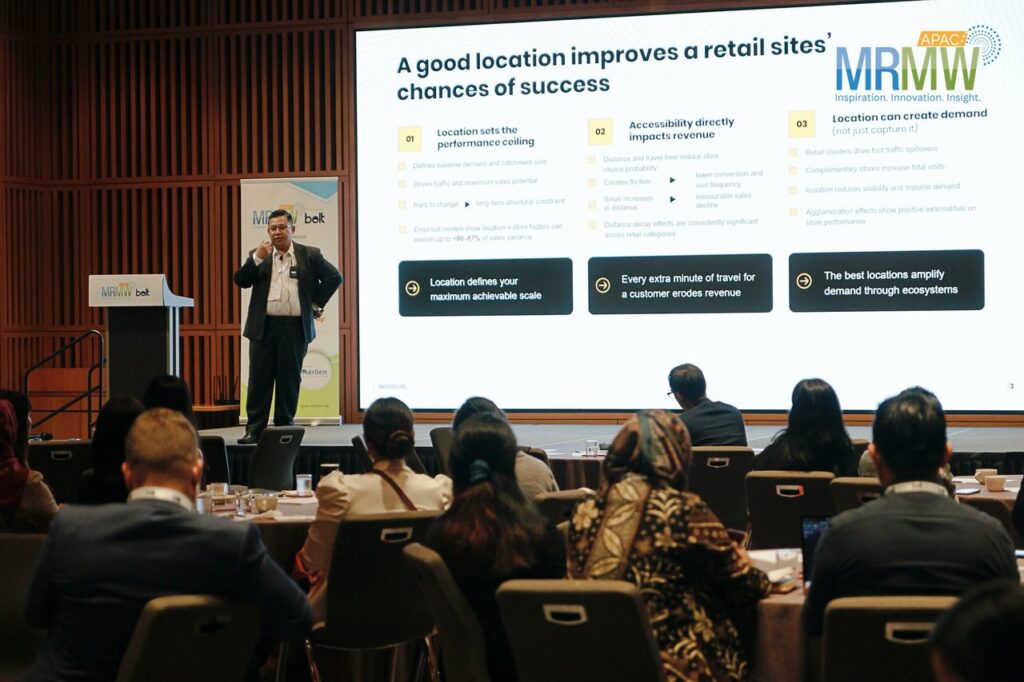
That shift was visible in how speakers framed their own roles. Zach Han, Head of Pricing & Strategy for Lubricants in Malaysia and Singapore at Shell, spoke about market intelligence moving from a reporting exercise to something that actively shapes strategic direction. Roy Wee, Assistant Vice-President of Digital Products & Services at IHH Healthcare, brought a similar lens to customer voice, describing it less as feedback to be collected and more as a strategic asset in its own right. And Serhiy Kalinovsky, Strategic Foresight Global Lead at Mondelez, made the case that foresight cannot be built on one-off studies, it depends on continuous signals, an ongoing read of where consumer behavior and markets are heading.
Taken together, these perspectives pointed to the same underlying tension: most organizations are not short on data. What they are short on is the ability to convert that data into timely influence, the difference between “can you generate insights?” and “can you connect them to business impact?”
Rethinking Customer Experience Research
Customer experience research came under particular scrutiny this year. Irene Lew Chai Ling, Head of Customer Experience for Malaysia at OCBC, argued that timing – not just methodology – defines whether CX research reflects the truth of an experience: the longer the gap between an interaction and the moment it’s measured, the more a customer’s memory of it changes.
A related session, “Beyond the Post-Purchase Survey: What Actually Works in Modern CX Research,” took this further, laying out the limits of the traditional survey model, by the time it reaches a customer, their memory has shifted, and it tends to miss the customers who dropped off due to friction, often the most revealing cases of all. The proposed alternative: a move from measurement to action, with continuous listening across every touchpoint: apps, websites, contact centers, chatbots, social channels, and physical locations; consolidated into a single view that lets teams spot issues and respond in real time. The session also pointed to CX professionals evolving from researchers into connectors, translating customer signals into action across the business.
Culture, Context, and the East-West Lens
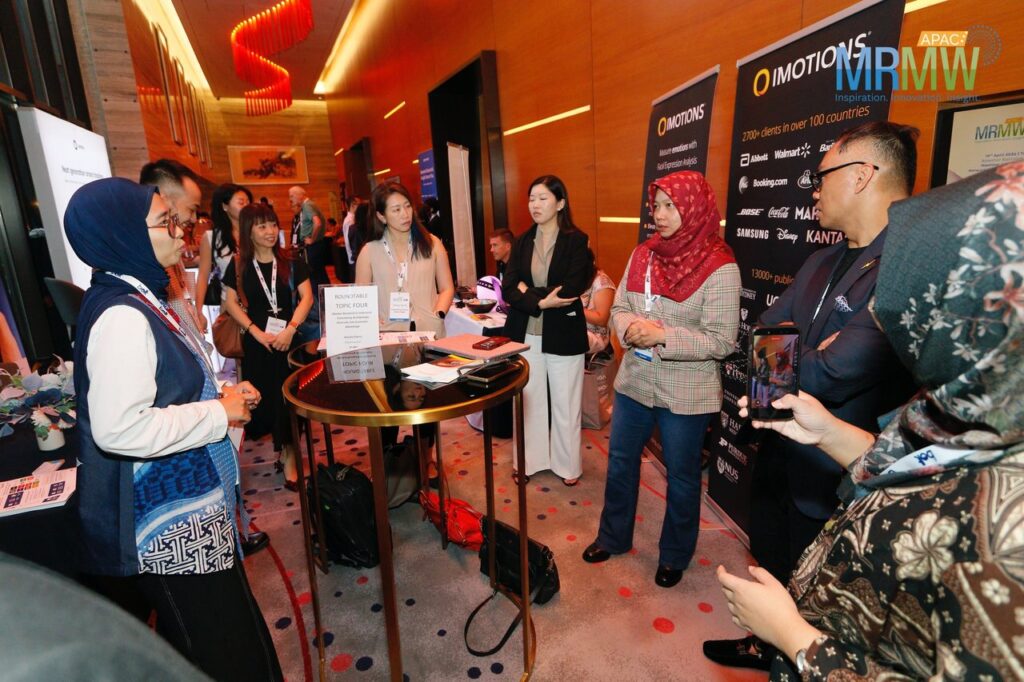
One of the more distinctive aspects of this year’s program was its willingness to address the wider context that insights work sits within. Day one opened with a session from Professor Joseph Liow Chinyong, Dean of the Lee Kuan Yew School of Public Policy and Chairman of the Middle East Institute at the National University of Singapore, addressing the geopolitical shifts shaping the current business environment: a reminder that insights work doesn’t happen in a vacuum. Vijay Raj, Executive Vice President of CMI in the FMCG industry, picked up that thread, reinforcing the importance of understanding people through the lens of culture as more of the industry’s tools become technology-driven.
Cultural context was also central to “Bridging East and West,” a talk from Fred Aragão, VP and User Experience Research Lead at JPMorgan Chase, exploring cultural adaptation in global UX research. Its core argument, that there is no such thing as a universally good experience, and that without deliberate attention researchers risk designing for assumptions rather than people, resonated strongly with attendees working across both Western and APAC markets.
A panel featuring Lolitta Suffian, Senior Vice President of Customer Experience at Bank Simpanan Nasional, and Bernadette Lopez, Head of Consumer & Shopper Understanding at Ferrero, was singled out by several attendees for making complex topics accessible, hosted on day one by Dosik Bang, Head of APAC Cross-Brand Marketing at IBM.
AI: Raising the Bar, Not Just the Speed
Artificial intelligence ran through nearly every conversation at MRMW APAC 2026, but not as a topic in isolation. The sessions that addressed AI most directly were the ones that pushed back hardest on the idea that faster analysis is the point.
Emily Yang, Head of Human-Centered AI and Innovation at Standard Chartered, delivered a session on AI fairness that several attendees described as a reality check. The argument: bias in AI systems doesn’t get fixed after the fact, it has to be designed out from the start. The HCA Human Factors framework she presented was framed as a practical lens for moving from good intentions to measurable outcomes, a distinction that landed clearly in a room full of practitioners who work with AI-generated outputs daily.
Sebastien Boisseau, who leads Digital Customer Engagement at Menarini, took a different angle in his workshop: making the case that prompting is a structured research skill, not a matter of trial and error. One takeaway that circulated widely after the session: there is no one-size-fits-all AI tool; the question is always fit for a given research question, not raw capability.
Underlying both sessions was a tension that surfaced repeatedly across the two days: AI is accelerating what insights teams can do, but what it’s really doing is raising the bar on what’s expected of them. The question is no longer whether teams can generate insights. It’s whether they can connect those insights to decisions, navigate uncertainty, and influence the business in real time, faster than was previously possible, with less margin for error.
A Room Built for Connection
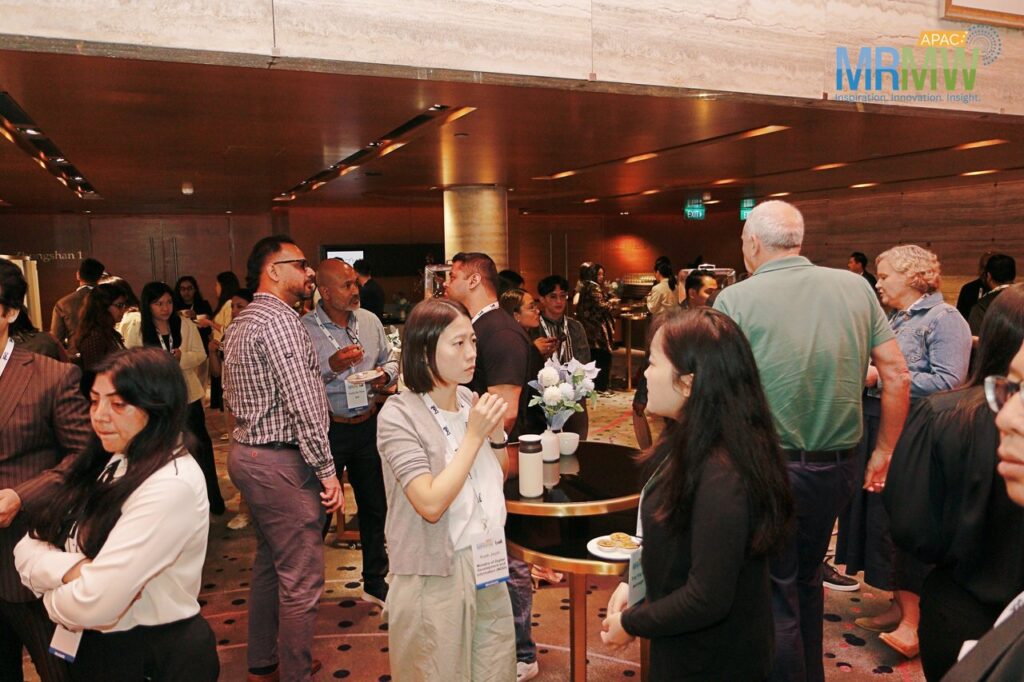
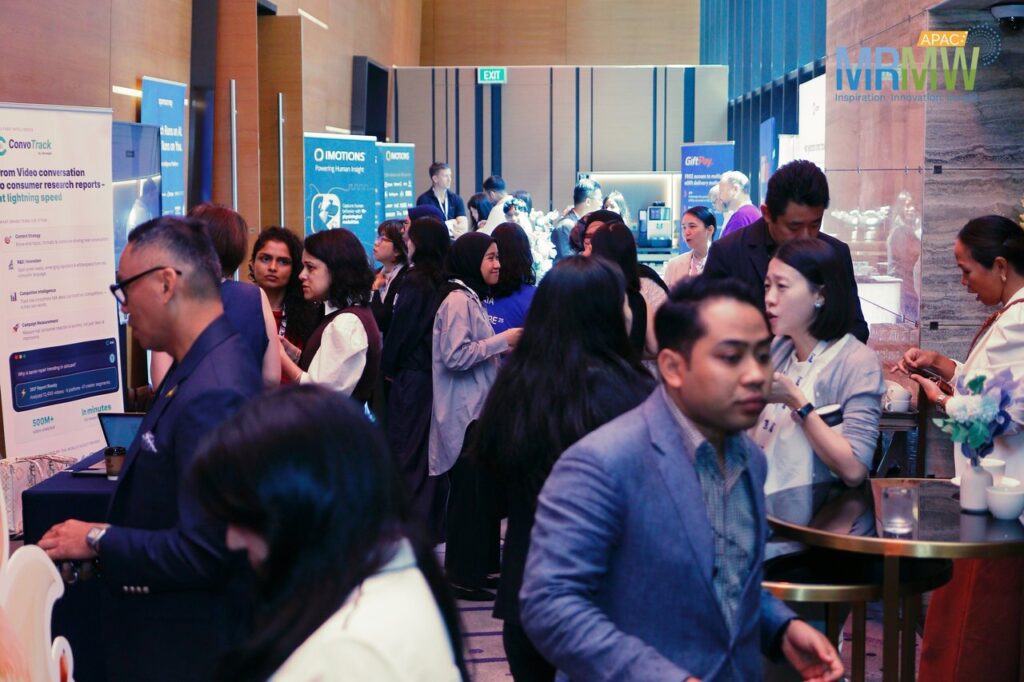
Beyond the agenda, attendees consistently pointed to the quality of the conversations happening between sessions. Several described MRMW APAC as a space where insights leaders from very different industries found themselves working through the same questions, often for the first time with people outside their usual networks, some attending their first market research conference altogether, and leaving with real connections across a notoriously fast-moving and often siloed industry.
Looking Ahead
APAC 2026 closed with a strong sense that the conversation is far from over.
Merlien Institute’s next event in the region takes a different lens, one that goes deeper into how we understand people, not just analyze them. QUAL360 APAC, the only global conference series dedicated to qualitative market research, returns to Singapore on November 3-4, 2026, at Aloft Singapore Novena. Under the theme “Qual Research Reimagined: Connecting Humans & Innovation”, the program brings together qualitative practitioners, brand-side insights leaders, and agency experts to explore where qual methodology, technology, and human understanding intersect. For agenda and registration details, visit apac.qual360.com.
MRMW APAC will return to Singapore in 2027.

MRMW APAC 2026: Insights Are Becoming a Decision-Making Function
MRMW APAC 2026, organized by Merlien Institute, returned to Singapore on April 14-15, bringing together market research and consumer insights leaders from across Asia-Pacific for two days of sessions, panels, and conversations. Attendees came from organizations spanning FMCG, healthcare, banking, technology, and research agencies, a mix that set the tone for an event built around questions that cut across categories.
If there was one thread running through this year’s edition, it was a redefinition of what the insights function is for. Across talks on strategy, customer experience, and culture, a consistent message emerged: insights are no longer positioned as a support function that feeds reports to other departments. Increasingly, they are becoming the function that shapes the decision itself.
From Reporting to Strategy
That shift was visible in how speakers framed their own roles. Zach Han, Head of Pricing & Strategy for Lubricants in Malaysia and Singapore at Shell, spoke about market intelligence moving from a reporting exercise to something that actively shapes strategic direction. Roy Wee, Assistant Vice-President of Digital Products & Services at IHH Healthcare, brought a similar lens to customer voice, describing it less as feedback to be collected and more as a strategic asset in its own right. And Serhiy Kalinovsky, Strategic Foresight Global Lead at Mondelez, made the case that foresight cannot be built on one-off studies, it depends on continuous signals, an ongoing read of where consumer behavior and markets are heading.
Taken together, these perspectives pointed to the same underlying tension: most organizations are not short on data. What they are short on is the ability to convert that data into timely influence, the difference between “can you generate insights?” and “can you connect them to business impact?”
Rethinking Customer Experience Research
Customer experience research came under particular scrutiny this year. Irene Lew Chai Ling, Head of Customer Experience for Malaysia at OCBC, argued that timing – not just methodology – defines whether CX research reflects the truth of an experience: the longer the gap between an interaction and the moment it’s measured, the more a customer’s memory of it changes.
A related session, “Beyond the Post-Purchase Survey: What Actually Works in Modern CX Research,” took this further, laying out the limits of the traditional survey model, by the time it reaches a customer, their memory has shifted, and it tends to miss the customers who dropped off due to friction, often the most revealing cases of all. The proposed alternative: a move from measurement to action, with continuous listening across every touchpoint: apps, websites, contact centers, chatbots, social channels, and physical locations; consolidated into a single view that lets teams spot issues and respond in real time. The session also pointed to CX professionals evolving from researchers into connectors, translating customer signals into action across the business.
Culture, Context, and the East-West Lens
One of the more distinctive aspects of this year’s program was its willingness to address the wider context that insights work sits within. Day one opened with a session from Professor Joseph Liow Chinyong, Dean of the Lee Kuan Yew School of Public Policy and Chairman of the Middle East Institute at the National University of Singapore, addressing the geopolitical shifts shaping the current business environment: a reminder that insights work doesn’t happen in a vacuum. Vijay Raj, Executive Vice President of CMI in the FMCG industry, picked up that thread, reinforcing the importance of understanding people through the lens of culture as more of the industry’s tools become technology-driven.
Cultural context was also central to “Bridging East and West,” a talk from Fred Aragão, VP and User Experience Research Lead at JPMorgan Chase, exploring cultural adaptation in global UX research. Its core argument, that there is no such thing as a universally good experience, and that without deliberate attention researchers risk designing for assumptions rather than people, resonated strongly with attendees working across both Western and APAC markets.
A panel featuring Lolitta Suffian, Senior Vice President of Customer Experience at Bank Simpanan Nasional, and Bernadette Lopez, Head of Consumer & Shopper Understanding at Ferrero, was singled out by several attendees for making complex topics accessible, hosted on day one by Dosik Bang, Head of APAC Cross-Brand Marketing at IBM.
AI: Raising the Bar, Not Just the Speed
Artificial intelligence ran through nearly every conversation at MRMW APAC 2026, but not as a topic in isolation. The sessions that addressed AI most directly were the ones that pushed back hardest on the idea that faster analysis is the point.
Emily Yang, Head of Human-Centered AI and Innovation at Standard Chartered, delivered a session on AI fairness that several attendees described as a reality check. The argument: bias in AI systems doesn’t get fixed after the fact, it has to be designed out from the start. The HCA Human Factors framework she presented was framed as a practical lens for moving from good intentions to measurable outcomes, a distinction that landed clearly in a room full of practitioners who work with AI-generated outputs daily.
Sebastien Boisseau, who leads Digital Customer Engagement at Menarini, took a different angle in his workshop: making the case that prompting is a structured research skill, not a matter of trial and error. One takeaway that circulated widely after the session: there is no one-size-fits-all AI tool; the question is always fit for a given research question, not raw capability.
Underlying both sessions was a tension that surfaced repeatedly across the two days: AI is accelerating what insights teams can do, but what it’s really doing is raising the bar on what’s expected of them. The question is no longer whether teams can generate insights. It’s whether they can connect those insights to decisions, navigate uncertainty, and influence the business in real time, faster than was previously possible, with less margin for error.
A Room Built for Connection
Beyond the agenda, attendees consistently pointed to the quality of the conversations happening between sessions. Several described MRMW APAC as a space where insights leaders from very different industries found themselves working through the same questions, often for the first time with people outside their usual networks, some attending their first market research conference altogether, and leaving with real connections across a notoriously fast-moving and often siloed industry.
Looking Ahead
APAC 2026 closed with a strong sense that the conversation is far from over.
Merlien Institute’s next event in the region takes a different lens, one that goes deeper into how we understand people, not just analyze them. QUAL360 APAC, the only global conference series dedicated to qualitative market research, returns to Singapore on November 3-4, 2026, at Aloft Singapore Novena. Under the theme “Qual Research Reimagined: Connecting Humans & Innovation”, the program brings together qualitative practitioners, brand-side insights leaders, and agency experts to explore where qual methodology, technology, and human understanding intersect. For agenda and registration details, visit apac.qual360.com.
MRMW APAC will return to Singapore in 2027.
Share:
Latest Updates
Dan Foreman joins Bolt Insight Board
Small Joys First: How Packaged Ice Cream Is Winning in Thailand’s Tight Economy
The Generation Generalisation: What Marketers Miss When They Target Generations