By: Daniel Hardwick, Associate Director and Felicia Widodo, Senior Research Manager, 2CV
Time is of the essence
Gen Z, (one after Y and two after X), is the latest generational challenge for marketers. Born into uncertainty shaped by pandemics, visible climate change, and global conflict, they are values-driven, thoughtful about mental health, and more demanding of the brands they engage with. They expect transparency, inclusivity, and accountability.
Crucially, they are digital natives. Their world is defined by instant media access, information overload, and social visibility. This creates pressure for them to stay on-trend and selective about where they spend time. For brands, the challenge is breaking through in an oversaturated landscape. As Reed Hastings remarked in 2019, “We compete with Fortnite more than HBO – it’s about winning time, not content.” This rings truer than ever.
To understand how to win Gen Z’s attention, 2CV, in partnership with PureSpectrum, replicated its 2018 global study across six markets to explore what drives this generation’s media choices and how brands can connect more effectively.
Media needs haven’t changed, but priorities have
Gen Z’s top five reasons to use media — to have fun, relax, connect with others, learn, and explore — remain consistent since 2018. What has changed is priority. Connection has moved up from fifth to third place, while exploration and learning have fallen in the list. Self-expression and reaching a wider world through media now sit at the heart of how Gen Z connects.
Yet satisfaction with how brands meet these needs has declined sharply. Between 2018 and 2025, satisfaction dropped by double digits across nearly every measure:
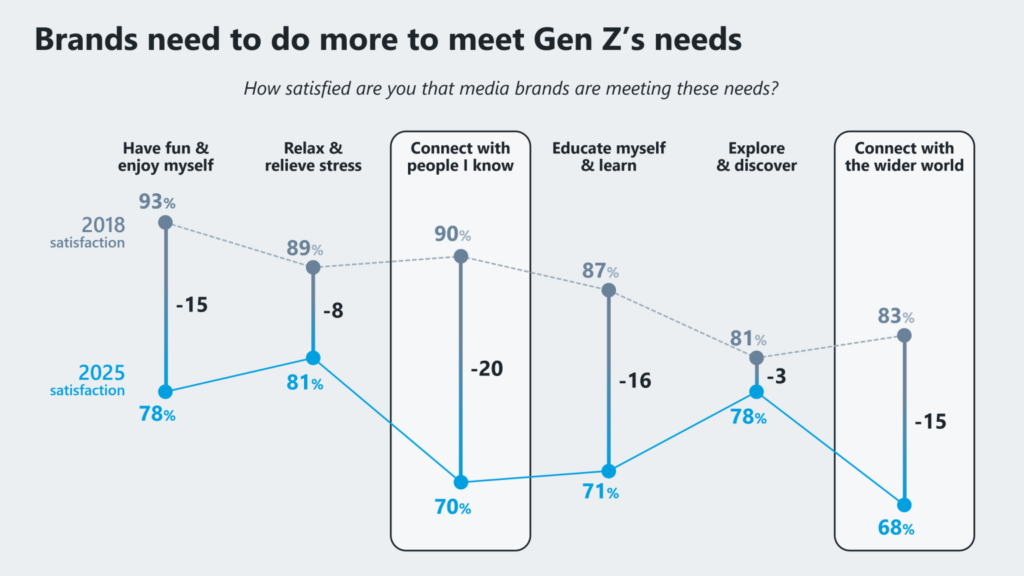
This growing gap signals both risk and opportunity. Media brands that fail to evolve risk losing relevance; those that adapt can reclaim trust and the time Gen Z spends with them.
The contrast between Snapchat and TikTok illustrates this shift. In 2018, Snapchat led Gen Z engagement, but TikTok’s rise, through video-led personal expression, has since transformed the landscape. Instagram’s introduction of Reels further confirms the pivot: the needs stay constant, but success depends on meeting them in new ways.
How can brands seize this opportunity?
The key lies in Category Entry Points (CEPs): needs, moments, or situations that trigger someone to actively engage with media. Rooted in the Ehrenberg-Bass model of brand growth, CEPs drive mental availability, being easily recalled in the right context, alongside physical availability (being easy to find and buy).
Media brands are generally easy to find, access and buy from; growth now depends on mental availability.
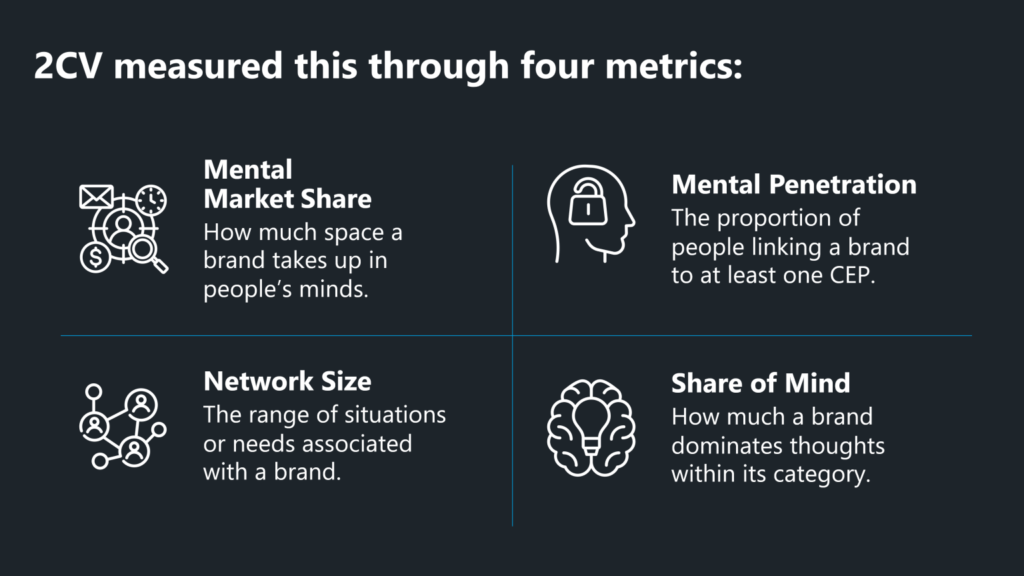
Who’s winning the battle for Gen Z’s mindshare?
Across all ages, YouTube leads on every measure, occupying 17% mental market share and reaching 90% penetration, followed by Netflix, Instagram, and TikTok. But among Gen Z individuals, competition tightens dramatically.
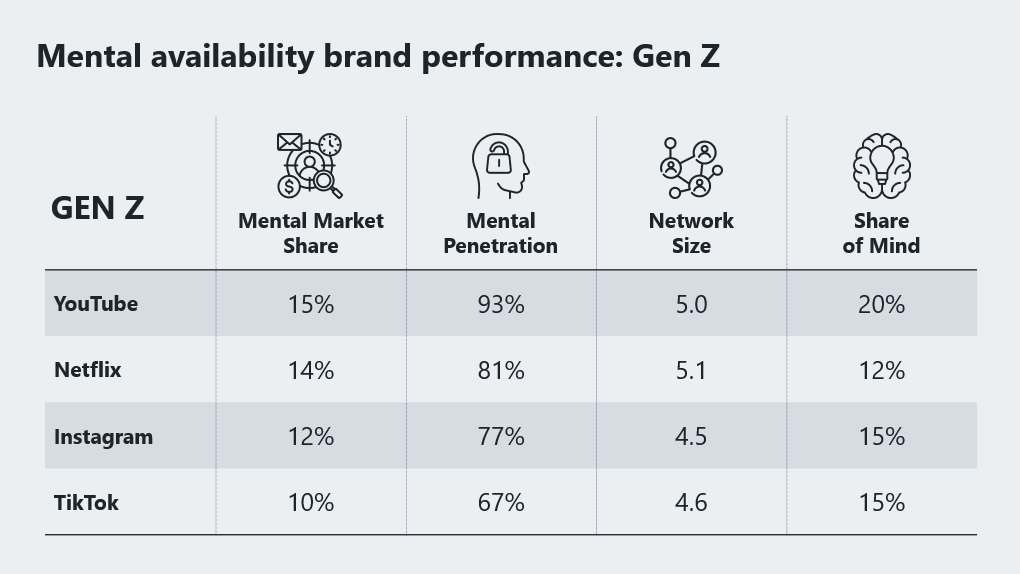
Gen Z’s media repertoire is smaller and more selective than older generations. They remember brands in fewer contexts and switch quickly if their needs aren’t met. Winning with Gen Z therefore means expanding mental networks and continually refreshing relevance.
Three Ways Brands Can Win
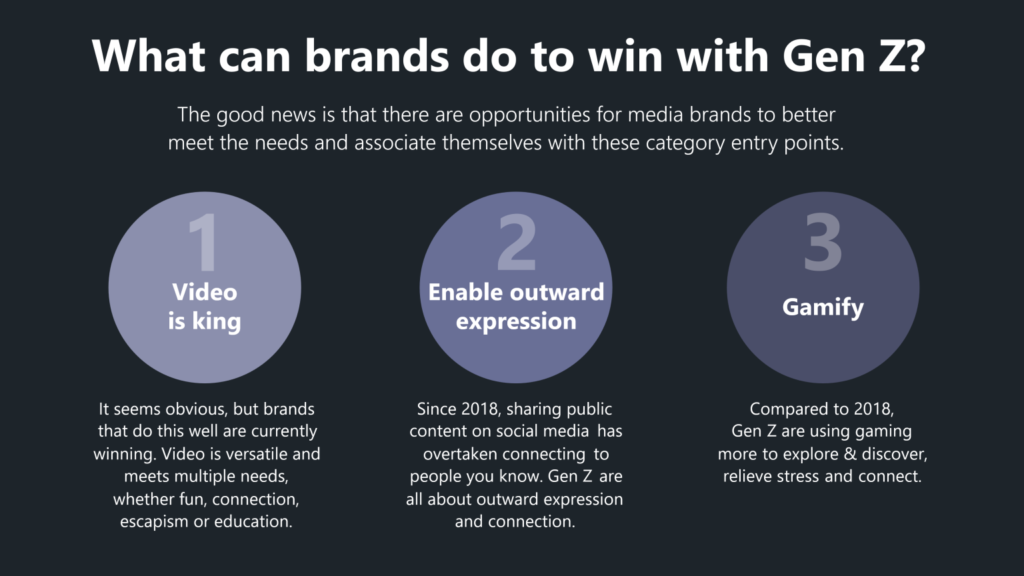
1. Video Is King
Video meets multiple needs — fun, relaxation, escapism, education, and connection. Brands excelling in video are winning mental availability. TikTok’s short-form dominance has reshaped consumption habits, prompting YouTube, Instagram, and Netflix to follow suit.
Spotify’s expansion into video and its deal with Channel 4[CO1] show how non-visual brands can adapt. Although its mental availability trails video-first competitors, this move broadens its CEPs and strengthens recall across entertainment contexts.
2. Enable Outward Expression
Gen Z’s behaviour has shifted from private connection to public expression. Since 2018, sharing public content has overtaken direct messaging behaviour, with a seven-point decline in those saying they’ve found the perfect brand to connect with others.
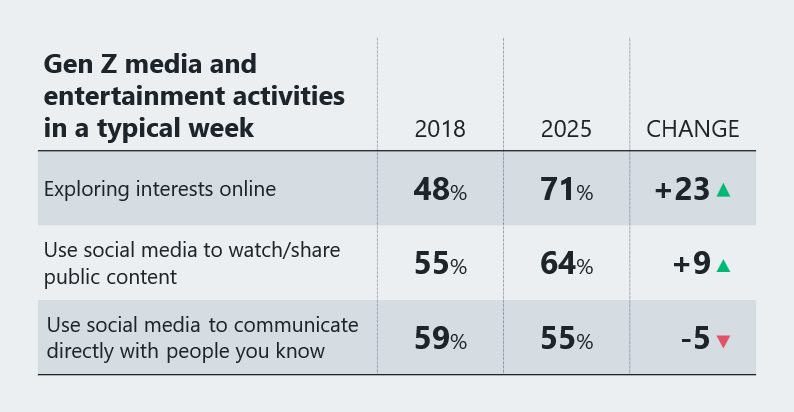
Brands that help Gen Z express themselves, through co-creation and user-generated content, can strengthen bonds. With 76% of Gen Z using AI weekly to create short-form or written content, offering platforms inviting self-expression is key. However, they use only a few “core” platforms to represent identity, meaning brands must earn a place in that limited set.
3. Gamify Experiences
Gaming continues to expand as a vehicle for discovery, stress relief, and connection. Netflix’s move into gaming acknowledges this trend, while Roblox demonstrates the power of shared virtual creation. Even non-gaming platforms are gamifying: Snapchat streaks and TikTok’s Streak Pets reward engagement and reinforce daily use.
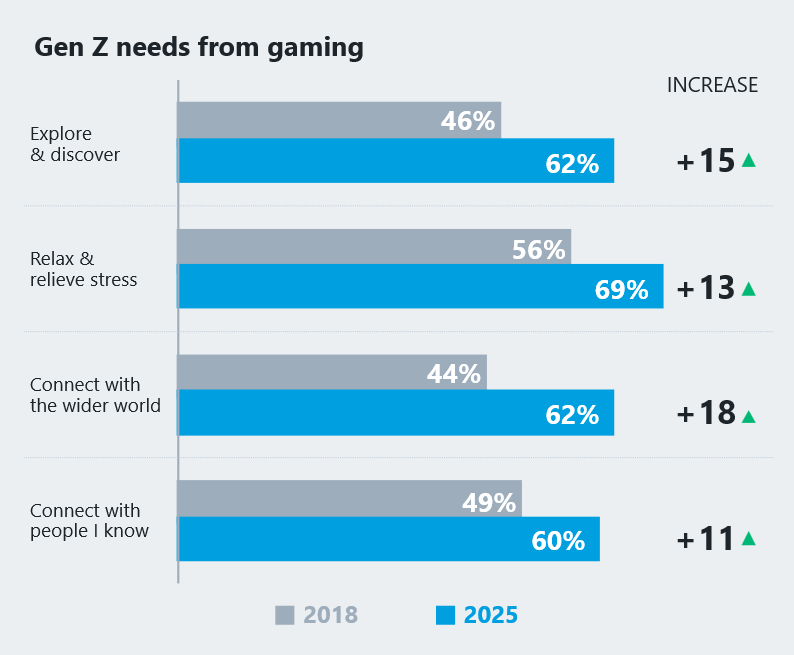
Between 2018 and 2025, Gen Z’s use of media to connect, explore, and relieve stress rose by more than 10 percentage points across the board, confirming that interactive and rewarding formats resonate most.
Society of the Spectacle
We live in a world where social interaction and self-identity are mediated through content. To thrive, media brands must be mentally available for the moments and needs that define Gen Z’s consumption and continuously evolve those connections.
Brands that align with the category entry points that matter most to this generation will be chosen more often, talked about more widely, and loved more deeply. In the battle for Gen Z’s attention, presence of mind is the new prime time.
If you would like to learn more, or access a copy of the whitepaper that supports this, please reach out to singapore@2cv.com.
This article was first published in the Q4 2025 edition of Asia Research Media